

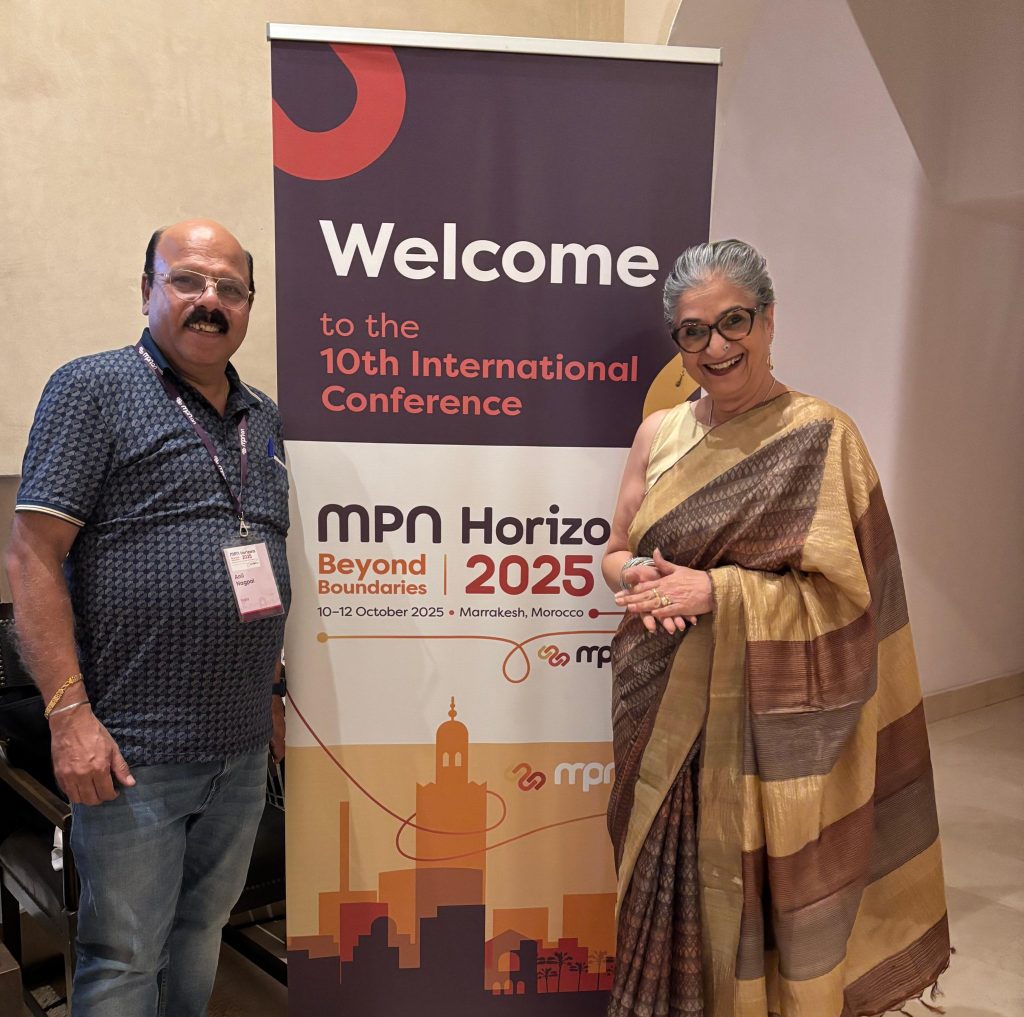
Anil Nagpal represented FOM at the 10th MPN Horizons 2025 conference held in Marrakesh, Morocco on 10-12 October.

Key highlights of the participation:
· A presentation by Anil Nagpal on the Best Practices session: “Patient Intervention Program in India”. Anil ji‘s presentation showcased how FOM leveraged its long-running experience as a support group for CML (also a blood disorder under the MPN umbrella), to extend similar support to patients with other three MPNs, which so far lacked much engagement. In this session Viji ( who is a Steering Committee Member) was one of the co-chairs
· Presentation by Viji Venkatesh titled “Cultural Challenges in Patients in LMIC- Eastern Philosophy of Acceptance” .
· FOM poster “ Stronger Together: Voices of Hope in MPN, Amplified by FOM” wins 3rd prize, reflecting international acknowledgement of FOM’s impact in strengthening support for the MPN community in India


Day 1: Advocacy Perspectives
Opening & Regional Advocacy Session
Participants were divided into regional groups; our representation fell under the Africa and Asia cluster. Countries shared best practices in patient support, challenges related to diagnosis and access, and local advocacy initiatives. Common obstacles included limited resources, delayed diagnosis, and lack of awareness among both healthcare providers and communities.
Advocacy Session 2: Life Before and After Diagnosis
1. Patient Experience and Symptom Burden
Discussions highlighted the profound personal impact of MPNs. Patients commonly experience:
- Night sweats, fever, weight loss
- Abdominal discomfort, early satiety
- Fatigue, bone pain, pruritus
- Inactivity, difficulty concentrating
- Depression, anxiety, and sexual dysfunction
Physicians emphasized key diagnostic indicators such as marrow fibrosis, abnormal blood counts, and enlarged liver/spleen.
2. The Role of Caregivers
Caregivers play a central role in:
- Monitoring health and symptoms
- Communicating with clinicians
- Supporting decision-making and advocating for the patient
- Managing finances and care logistics
- Ensuring family stability and social well-being
3. Cultural Challenges in LMICs
Viji Amma presented the Eastern philosophy of acceptance, highlighting how cultural, social, economic, and healthcare-system factors influence patient behaviour, access, and adherence in low- and middle-income countries.
Day 2: Medical and Advocacy Advancements
Medical Session 1: Diagnostics & Fundamentals
Experts reviewed:
- Updated diagnostic criteria for ET, PV, and MF
- Practical considerations in interpreting laboratory results
- The role and limitations of bone marrow biopsy
- Interferon therapy, inflammation in MPNs, and management of associated side effects
Medical Session 2: MPNs Today and Tomorrow
The session outlined the current standard of care and pipeline therapies across:
- Polycythaemia Vera (PV)
- Essential Thrombocythaemia (ET)
- Myelofibrosis (MF), including new and combination-treatment strategies
Advocacy Workshop: Strengthening Patient Groups
Two parallel workshops focused on:
- Community building, campaign development, and fundraising strategies
- Patient engagement, promoting collaboration between advocacy groups and haematology units to improve outreach and support services
Medical Session 3: Research, Studies and Endpoints
Key themes included:
- The increasing role of patient advocates in drug development
- Understanding traditional and emerging clinical endpoints, and why they matter
- A regulatory overview of health economics and approval pathways at the FDA and EMA
Day 3: Best Practices & Quality of Life
Advocacy Session 4: Global Best Practices
Highlights included:
- Innovative approaches to administrative restructuring
- Patient Intervention Programs in India
- Malaysia’s initiative: Compass – First National MPN Support & Advocacy Network
- The United for Myelofibrosis collaboration
- Insights from the Nordic Meeting on CAR-T and novel therapies with a focus on MPNs
Medical Session 4: Managing Quality of Life
Speakers discussed:
- The burden of long-term disease complications and treatment effects on overall well-being
- The importance of an integrated care model involving patients, advocates, and clinicians
- Empowerment through symptom tracking and self-monitoring tools
Conclusion
The MPN Horizons 2025 Conference provided an invaluable space for learning, collaboration, and advocacy development. The diverse sessions—from medical updates to grassroots patient engagement—reinforced the collective commitment to improving diagnosis, treatment access, and quality of life for individuals living with MPNs worldwide.


Leave a Reply